

A Partnership Focused on Second Chances: Northern Shenandoah Valley Adult Education & Northwestern Regional Adult Detention Center
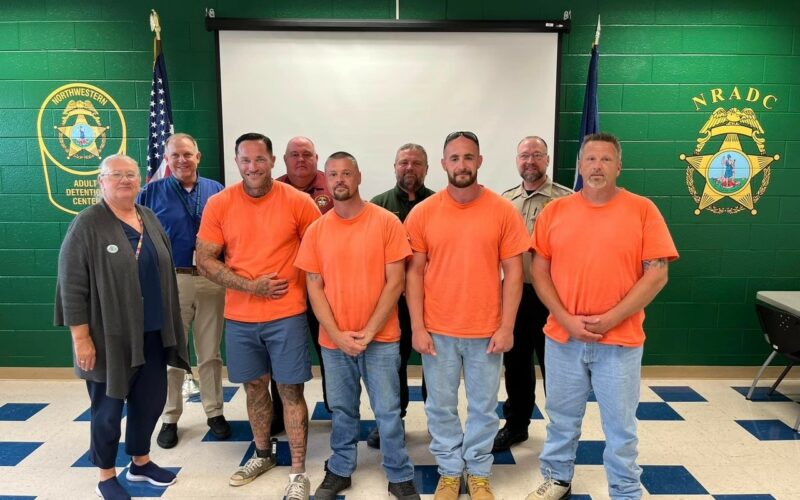
Celebrating the accomplishments of the horticulture program: adult learners stand alongside the adult education instructor, Master Gardener, and three correctional officers.
Article by Sharon Hetland, Regional Program Manager
“We want them coming out better than when they came in.”
That guiding principle from Superintendent Clay Corbin has shaped the long-standing partnership between Northwestern Regional Adult Detention Center and Northern Shenandoah Valley Adult Education. For more than 30 years, NSVAE has provided GED® instruction and educational support to incarcerated individuals at NRADC, building a program rooted in consistency, collaboration, and the belief that education creates opportunity.
Over the decades, the partnership has weathered changes in instructors, fiscal agents, administration, and technology. What has remained constant is a shared commitment to helping inmates develop skills, confidence, and pathways toward successful reentry into their communities.
Like many educational programs, the partnership faced major challenges during the COVID-19 pandemic. Even while outside access was restricted, both organizations worked to maintain instruction and communication. Print lessons were distributed to students through correctional officers, Zoom conferences were arranged when possible, and NSVAE leadership remained in close contact with jail staff. When restrictions were lifted, NRADC was eager to resume in-person classes and explore ways to expand programming.
That renewed momentum led to the development of Integrated Education and Training (IET) opportunities for work release participants. The first IET program focused on horticulture and landscaping. NRADC already maintained a large greenhouse, and the facility’s special education teacher was also a Master Gardener. Together, the adult education instructor, the Master Gardener, and correctional staff overseeing the greenhouse collaborated to recruit participants, provide instruction, and prepare students for certification through NOCTI.
The results were immediate and meaningful. The greenhouse flourished, additional fruit trees were planted, and participants demonstrated visible pride in their work. Officers reported fewer behavioral disruptions, and several participants secured landscaping jobs after release. The success of the horticulture program reinforced the value of hands-on career training and encouraged the partners to think even bigger.
The next step was expanding IET opportunities beyond the jail walls. Inmates had consistently expressed interest in Heavy Equipment Operator (HEO), welding, and skilled trades programs. Workforce Solutions at Laurel Ridge Community College offered a mobile HEO simulator, which presented an exciting opportunity—but also required extensive planning and coordination.
Launching the HEO program involved collaboration among Workforce Solutions staff, college administration, Laurel Ridge security personnel, and NRADC leadership. Systems had to be developed that ensured safety, accountability, and student support. NRADC agreed to assume financial responsibility for any tuition costs if a participant did not complete the course, demonstrating the facility’s commitment to the program’s success.
The full-time adult education instructor at the jail played a key role throughout the process, helping students gather required documents, apply for financial aid, and complete college registration. Coordinating course schedules, arranging transportation, securing instructors, and creating time for collaboration between adult education and workforce instructors all required patience and persistence.
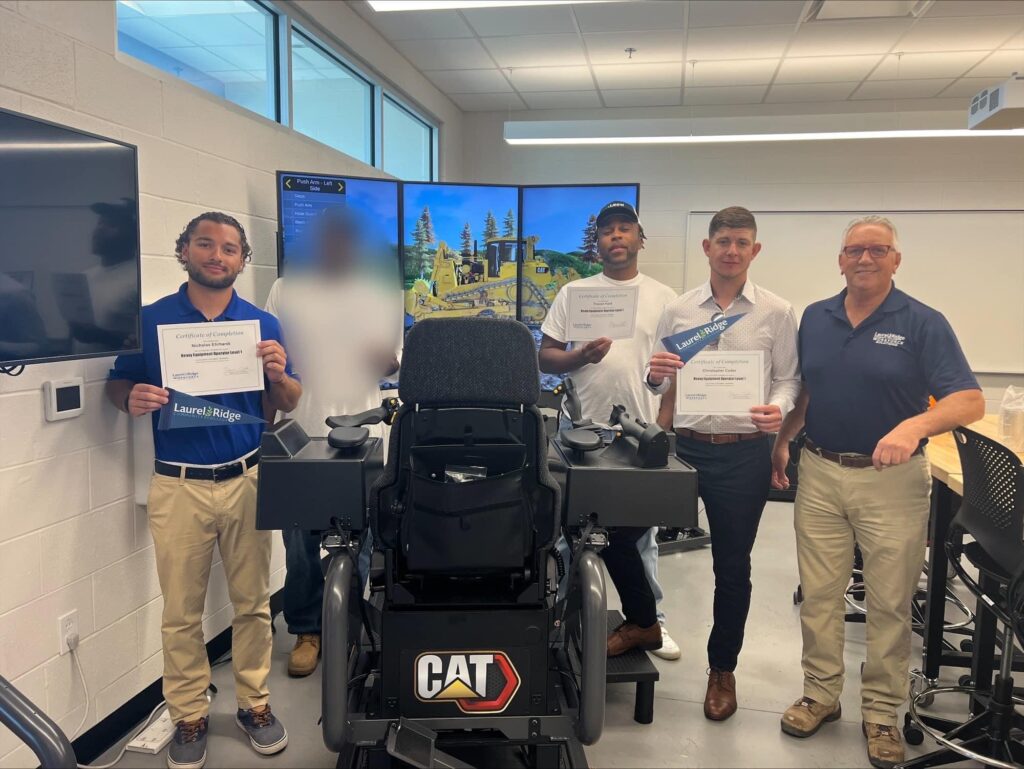 Heavy Equipment Operator (HEO) instructor and HEO IET participants with the simulator on Laurel Ridge campus.
Initially, the HEO simulator was brought directly to NRADC, though this arrangement required additional staffing because some students were using the simulator while others remained in classroom instruction. Later cohorts were transported to the Laurel Ridge campus, where students participated either alongside community members or in cohorts consisting entirely of NRADC participants.
Even small details helped create a meaningful college experience for students. Participants needed civilian clothing, meals, and supplies. Something as simple as receiving folders with the Laurel Ridge logo gave students a sense of pride and belonging. Careful participant selection and ongoing monitoring by NRADC staff contributed to consistently successful cohorts, and workforce instructors reported positive experiences working with the students. As a result, expanding into welding instruction became a much smoother process.
Communication and evaluation remain central to the partnership. Challenges are addressed immediately, and all partners continue working together to refine and strengthen programming. The NSVAE Career Coach also supports students as they prepare for employment by assisting with resumés, mock interviews, and workplace readiness skills.
One of the strongest outcomes of the HEO program is the direct connection to employment opportunities. Employers conduct interviews on the final day of class, giving participants an immediate opportunity to transition into the workforce. Additional employer partnerships are being explored to expand opportunities for work release participants and returning citizens.
Looking ahead, NRADC hopes to continue expanding IET offerings in the trades and eventually offer online, for-credit college courses with Adult Education support. The benefits of the partnership are evident across every level of the program: inmates gain skills and confidence, the detention center sees improvements in morale and behavior, Laurel Ridge benefits from increased enrollment and community engagement, and instructors enjoy meaningful collaboration across disciplines.
At the center of it all is a willingness to work together creatively and persistently. Superintendent Corbin’s commitment to finding ways to get to “yes” has been instrumental in making these opportunities possible. Through strong partnerships, shared trust, and a belief in the value of education, NRADC and NSVAE continue to create pathways for individuals to leave incarceration better prepared for the future than when they arrived.