

Building Success Through Strategic Partnerships and Data-Informed Practices
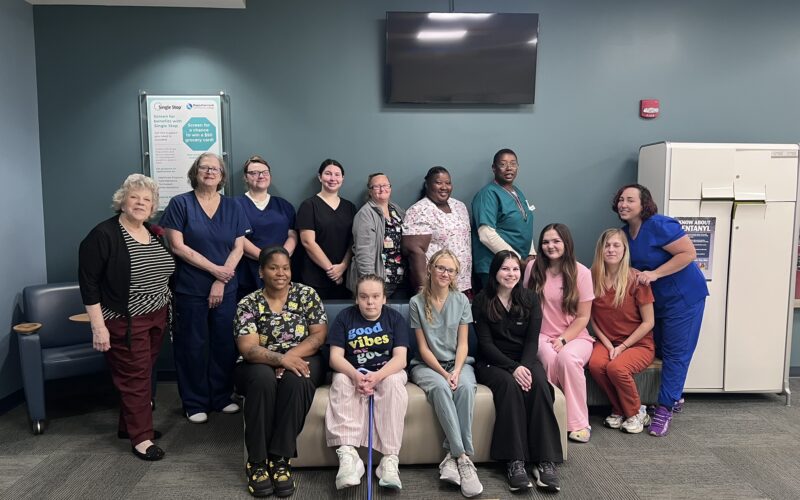
CMAP (Certified Medical Assistant + Phlebotomy) Class
by Marjorie Lampkin, Regional Program Manager
Region 17’s FY26 outcomes were not the result of a single initiative, but rather a coordinated effort focused on partnerships, workforce alignment, instructional quality, and continuous program improvement.
A key driver of Region 17’s enrollment success has been the expansion of partnerships with local correctional facilities and workforce training providers. Through collaboration with correctional institutions, the region implemented Integrated Education and Training (IET) programs that provide learners with opportunities to build academic skills while simultaneously preparing for in-demand careers. These programs have expanded access to education for populations that may otherwise face barriers to participation.
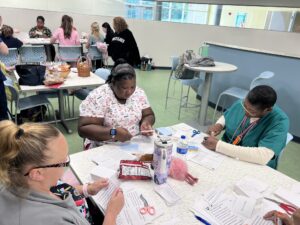
Another significant factor has been our partnership with Rappahannock Community College to develop and implement IET pathways in high-demand industries, including Patient Care Technician, Certified Medical Assistant, Phlebotomy, Medication Aide, and Welding. These programs connect adult learners directly to workforce credentials and employment opportunities while helping them achieve educational milestones.
To strengthen service delivery and increase capacity, Region 17 also partnered with neighboring Region 18 Adult Education. By combining resources, expertise, and staffing where appropriate, both regions were able to expand access to high-quality adult education and correctional education services. This collaboration allowed each program to leverage available funding and personnel more effectively, resulting in improved outcomes for learners across both service areas.
The Region 17 and Region 18 partnership also contributed significantly to both regions’ MSG performance. Total attendance hours across both regions remained strong, demonstrating meaningful learner engagement and sustained participation, two critical predictors of student success. Most importantly, the increase in MSG attainment reflects a shared commitment to instructional quality and continuous improvement. Targeted instructional strategies, regular data review, progress monitoring, and close collaboration with our community college and correctional partners helped ensure that learners remained on track to achieve measurable progress.
For programs seeking to improve enrollment and MSG outcomes, Region 17 offers three key lessons learned:
- Expand IET opportunities whenever possible. Participation in workforce-focused IET programs not only attracts learners but also creates multiple pathways for skill gains, credential attainment, and employment success.
- Adopt a culture of continuous improvement. Regular program reflection and a data-informed approach help identify opportunities for growth while keeping the focus on learner success and workforce readiness.
- Invest in partnerships. Strong relationships with correctional facilities, community colleges, workforce partners, and neighboring adult education programs allow regions to maximize resources, increase capacity, and improve outcomes that would be difficult to achieve independently.
When partnerships, workforce training, instructional excellence, and data-informed decision-making come together, adult learners are empowered to achieve meaningful educational and career success.
*Editor’s Note: For more information on IETs developed by Regions 17 and 18, see June 2026 article “Lighting the Path to Reentry: The SHINE Correctional IET Program”