

More Than Job Hunting: How Career Fairs Become Community Catalysts
by Xavier Muñoz
For Maria, walking into the English Empowerment Center’s Career and Opportunities Fair meant stepping into uncharted territory. Like 81% of the 285 people who attended this year’s event, this was her first career fair ever. But Maria had an advantage many job seekers don’t; she carried with her a resumé she had crafted just weeks earlier in her English class, connecting classroom learning directly to real-world opportunity.
Maria’s story, while representing a composite of many participants’ experiences, illustrates a key connection between readiness and opportunity that is exactly what Juan Perez, Student Services Coordinator at the English Empowerment Center (EEC), envisioned when he launched the organization’s first Career and Opportunities Fair in 2023. EEC students face many barriers in addition to language barriers, such as transportation, uncertainty in whether they will qualify for advertised jobs, and fear of organizations whose goal is not in their best interest. Perez’s solution was elegantly simple: bring the resources directly to the learners.
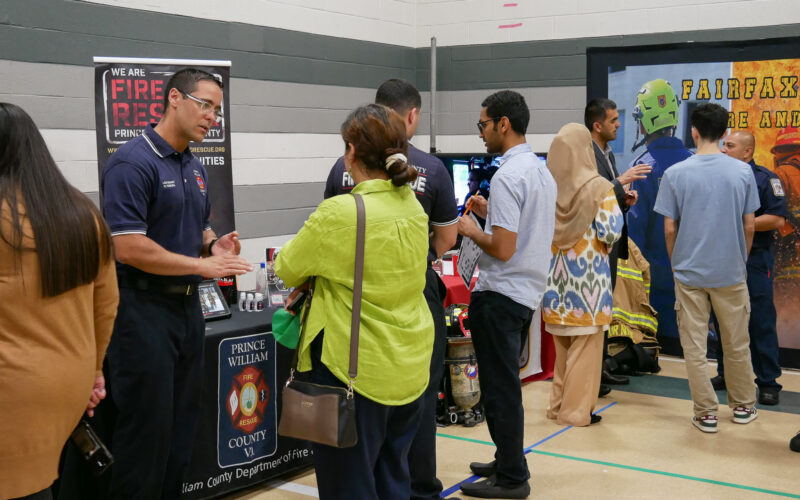
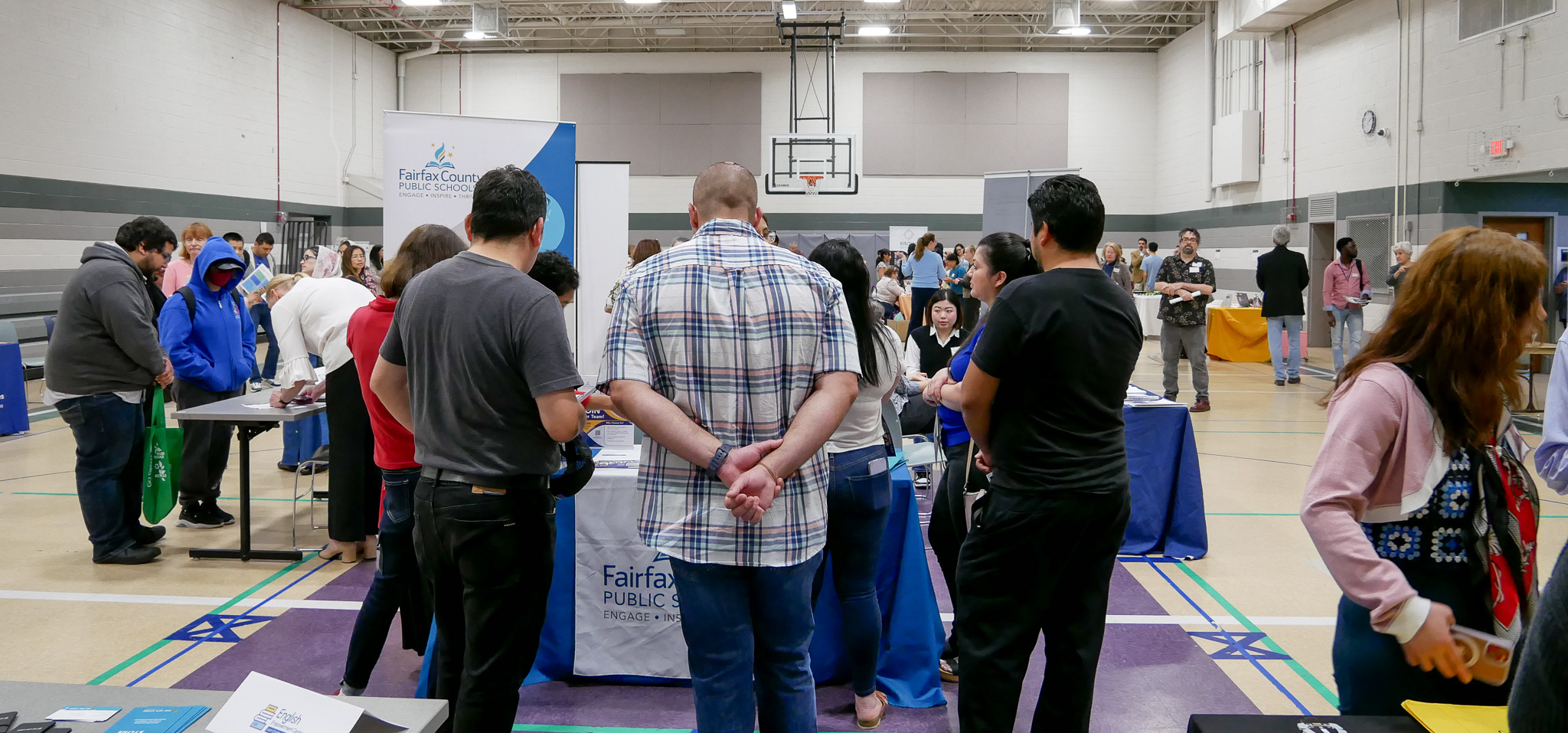
Held on a weekday evening in spring, the fair begins with optional pre-event resumé reviews for interested participants. During the three-hour event, attendees can visit an exhibitor hall featuring employers and service providers and participate in mock interviews or in concurrent workshops covering digital literacy and career skills.
Building Bridges to Economic Opportunity and Meaningful Connections
Three years later, that vision has grown dramatically. What started with 93 attendees has expanded to 285, with exhibitors growing from 18 to 34 employers and service providers. The fair brings together exhibitors that span the adult education and workforce development landscape—local ESOL and GED® programs, community college pathways, workforce training providers, and major local employers—alongside specialized services for internationally trained professionals, mental health services, afterschool programming for families, and more. In 2025, 43.8% of registrants were current students and 56.2% were former students or other community members, drawing from across Northern Virginia and beyond. But the numbers tell only part of the story.
The real transformation happens in moments such as when an attendee secures employment with Giant Food, or when someone creates their very first resumé in class and then confidently presents it to potential employers just days later. It happens when a representative from a refugee resettlement agency reports that “we were able to connect with so many community members and already have several folks getting set up for appointments at our center to receive support with food, clothing, and hygiene supplies. We were also able to share with many refugee attendees about [our] refugee specific employment program,” demonstrating how one event creates ripple effects throughout the community.
At its core, the Career and Opportunities Fair creates a welcoming venue for connecting adult learners with opportunities and essential services. When resources come to a central location, we expand opportunities. With Spanish and Farsi volunteer interpreters on hand, adult learners’ home languages become a bridge rather than a barrier. With dedicated greeters welcoming attendees and connecting them to interpreters or floaters who help navigate the fair and recommend exhibitors that might align with their interests and goals, attendees get personalized support. Through direct conversations with employers and service providers who are excited to engage with immigrants, participants can showcase their skills and access essential services rather than being overlooked.
Participant quote: “It was a good opportunity for me as a newcomer to America to get to know the job and training aspects.”
Growing Impact Through Strategic Community Partnerships
What makes the Career and Opportunities Fair particularly effective is how it leverages the EEC’s extensive connections. Staff actively engage with the Northern Virginia community, from Pre-K programs and human services coalitions to chambers of commerce and workforce development boards.
These established relationships help us recruit exhibitors, both new and repeat, to the fair who appreciate the strengths that adult learners and immigrants bring. And more than thirty volunteers, including EEC Board members, contribute to the event by making outreach calls to current students, reviewing resumés, leading workshops, and providing other on-site support.
This focus on community engagement creates meaningful results. Exhibitors tell us that, beyond productive conversations at their exhibitor table, the fair leads to appointments, referrals, and new relationships.
A Year-Round Approach to Career Pathways
The Career and Opportunities Fair exists within EEC’s broader approach to college and career navigation and workforce development. Juan, a certified career coach, coordinates trained volunteers in providing ongoing student advising services each semester and in leading stand-alone career prep sessions outside of class using materials from Upwardly Global. EEC actively promotes career fairs hosted by other organizations, both in-person and online, recognizing that providing multiple options better serves the diverse needs, goals, and schedules of all learners.
EEC also offers workforce-focused courses through its Destination Workforce® program, from advanced-level online English for Work classes to intensive English classes at multiple levels and workplace literacy partnerships with local businesses.
This multi-faceted approach means that, for EEC learners, the Career and Opportunities Fair is not an isolated event. Students don’t just attend—they arrive prepared with skills, confidence, and support systems that go beyond a single evening. And the connections formed at the fair often extend back into the classroom, with exhibitors like the local community college’s dean of ESL and representatives from The Herb Block Scholarship joining as guest speakers to describe their programs to students who may or may not have been able to attend the fair.
Continuous Growth and Adaptation
Participant feedback is essential for planning each subsequent Career and Opportunities Fair. We survey attendees and exhibitors after each fair (and informally during the fair), but we face challenges with response rates that make comprehensive follow-up data (especially employment outcomes) difficult to collect. While attendees consistently express appreciation for the event, they also provide valuable direction for growth. They’ve noted the need for more public sector positions and a wider representation of entry-level and middle-skills jobs for learners at various English proficiency levels. This feedback directly guides the recruitment of future exhibitors and modifications to the event communications, activities, and workshops.
The fair has also evolved to meet emerging needs. Recognizing that networking skills are as crucial as technical qualifications, EEC added an elevator pitch and networking workshop in 2025. Mock interviews provide safe spaces to practice essential skills, while resumé workshops ensure participants can present their best selves. Additionally, EEC’s Instructional Design Manager, Soo Park, developed and rolled out a lesson plan on career fairs for teachers to prepare students beforehand, building their confidence to take advantage of this and other career fairs.
The Bigger Picture
The fair creates a space where adult learners can see their English skills as professional assets, where local employers can connect with skilled workers, and where service providers can reach people who might not otherwise access their programs.
EEC’s choice to intentionally include service providers alongside employers reflects what many in the field recognize as an effective practice: support adult learners holistically. While most adult education programs understand the value of addressing practical barriers alongside classroom instruction, consistently implementing this approach can be challenging. Supportive services can be an important recruitment and retention strategy. EEC’s Career and Opportunities Fair demonstrates one way to design holistic programming. For programs seeking to build or expand their own career fair initiatives, the inclusion of service providers alongside employers can be a powerful way to meet learners’ full range of needs.
EEC’s Career and Opportunities Fair shows how partnerships amplify impact, how addressing practical barriers enables participation, and how connecting classroom learning to career fairs empowers adult learners and strengthens communities.
Most importantly, it demonstrates that when we bring opportunities directly to adult learners, we create more than job connections—we build bridges between aspiration and achievement, between learning and earning, between where people are and where they want to be.
EEC is happy to share its career fair lesson plan and elevator pitch workshop guide with other adult education programs. Access these resources by filling out this form. For additional tips and guidance on starting your own career fair, contact Xavier at [email protected].