

Lighthouse of the Pacific
by Karen Ramos
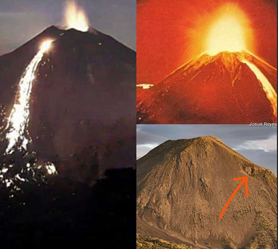 By coincidence, I received this photo, and it instantly reminded me of the breathtaking natural wonders that El Salvador has to offer. Astonished by its beauty, I felt inspired to write about one of its most iconic landmarks. The Izalco Volcano is the youngest volcano in both El Salvador and the world that remains active. Its name, derived from Nahuatl, means “place of the black sands,” a fitting description that still holds true today. It is also known as the “Lighthouse of the Pacific” because, during long nights sailing on the high seas, ships were guided by constant eruptions and lava flows, like a compass in the darkness of the night.
I clearly remember my mother’s stories about the fear the local inhabitants felt during those times. However, over time, people gradually grew accustomed to seeing the volcano alight, a flickering flame that illuminated the nights of the town. What once brought panic to the people eventually became a part of daily life, and the volcano slowly transformed into a popular tourist attraction around the entire region.
In fact, a hotel was built on a mountain facing the majestic volcano to offer guests a singular view of the spectacular lava flows. However, the builders were not as fortunate. By the time the hotel was completed, and just two weeks before its much-anticipated inauguration, the flames of what I call “the fire machine” were extinguished, leaving more than one hoping to witness that unique and natural spectacle. The locals also placed a big statue of the Virgin Mary at the base of the volcano, praying that the lava would not destroy their small village. Whether it was a miracle or not, the lava flow took another path, leaving the town untouched and free from devastation.
Until today this perfect cone of sand and rocks remains asleep and calm, encouraging the bravest tourists to venture out and climb to the top. One of the valiant was me. A long time ago on a perfect sunny day with a group of friends, I embarked on the expedition of my life, to discover the wonders of the volcano. Standing there at the top to 6,398 ft above sea level, it is impossible not to feel like the king of the world. But at the same time, the smell of sulfur and sight of fumaroles fills you with fear.
What makes this photo particularly fascinating is the visible second crater on the right side, formed by one of the lava eruptions in 1960. Remarkably, even 64 years later, this secondary crater remains intact, as seen in the photo above. It is almost as if the volcano itself is reminding us of the time when it was cloaked in fire, forever standing as the Lighthouse of the Pacific!